Surgery Service

Under-Eye Bag Surgery

Lower Blepharoplasty

Introduction

Tired, puffy eyes can make even the most vibrant face appear fatigued and aged. Under-eye bags are one of the most common aesthetic concerns among both men and women in their 30s and beyond. While skincare and non-surgical treatments can temporarily reduce swelling, they rarely correct the structural cause — the herniation of orbital fat beneath the eyes.

At Nida Esth’ International, Under-Eye Bag Surgery, or Lower Blepharoplasty, is performed by Dr. Piya Rungruxsiri, an ISAPS-certified plastic surgeon specializing in advanced facial rejuvenation. This delicate procedure restores a youthful, refreshed appearance by removing or repositioning excess fat, tightening loose skin, and smoothing the transition between the lower eyelid and cheek.

The result is a natural, rested look — not overdone, not hollowed — but simply as if you’ve had the best sleep of your life.

Update Beauty Trend

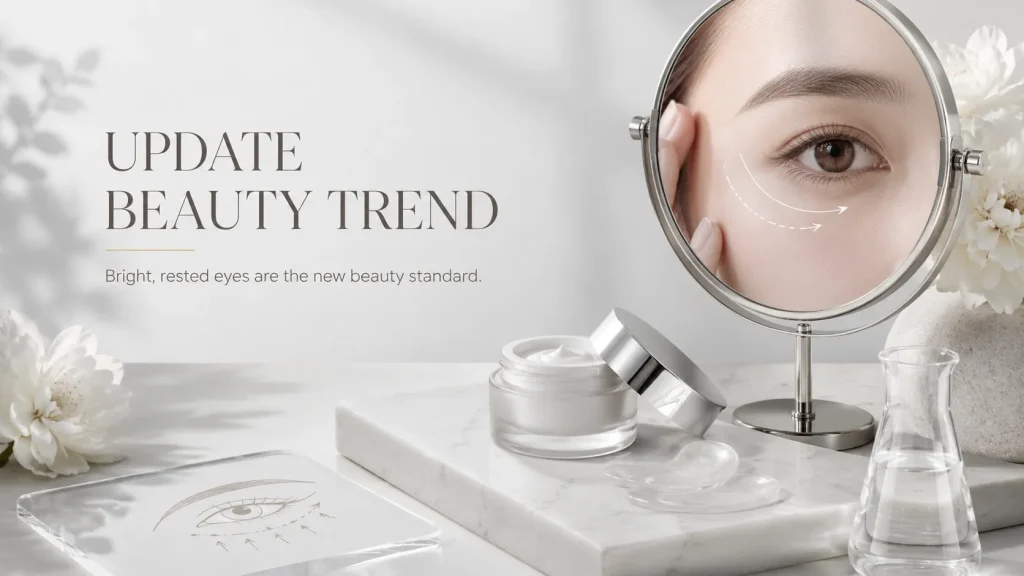
In 2025, aesthetic trends have shifted from overly tight or lifted appearances to natural freshness and youthful vitality. Modern beauty ideals emphasize bright, well-rested eyes — the hallmark of health, energy, and confidence.

Patients are no longer seeking drastic transformations, but subtle refinement that makes them look rejuvenated, not “done.” This has led to a surge in demand for lower blepharoplasty, especially among professionals and public figures who need to look alert and approachable.

Moreover, the rise of digital lifestyles — constant screen exposure, video calls, and social media — has made eye aesthetics more visible than ever. Puffy under-eyes and dark circles can make a person appear older or stressed online.

At Nida Esth’ International, Dr. Piya combines micro-incision techniques, fat repositioning, and laser skin tightening to achieve seamless, scar-free rejuvenation. This hybrid approach represents the next generation of under-eye correction — merging art, precision, and medical innovation.

What Does the Expert Say?

According to Dr. Piya Rungruxsiri, ISAPS member and Board-Certified Plastic Surgeon:

“Under-eye bags are not simply caused by lack of sleep. They are the result of weakened orbital septum and herniated fat pockets that protrude with age. To restore youthful balance, we must address both fat and skin integrity — not just remove tissue, but harmonize it.”

He emphasizes that modern blepharoplasty is about redistribution, not removal. Over-resection of fat in older methods often caused hollow, skeletal eyes. Today, Dr. Piya focuses on preserving volume by repositioning fat pads over the orbital rim — creating a smoother contour between the lower eyelid and cheek.

He adds:

“The eyes are the first feature people notice. The goal of my technique is to make you look fresher and younger — without anyone guessing you’ve had surgery.”

BEFORE and AFTER GALLERY

Nida Esth

Add us to get
exclusive offers.

Exclusively for clients with a scheduled appointment
who have completed the Skin Treatment Program.

* Terms and conditions apply.

Contact Us Today

Call: +662-252-221

Beautifying Hours:

Tue – Sat : 9AM. – 6PM.
Sun – Mon : 9AM. – 5PM.

What is Under-Eye Bag Surgery?

Under-Eye Bag Surgery, medically known as Lower Blepharoplasty, is a cosmetic surgical procedure that corrects puffiness, sagging skin, and wrinkles beneath the eyes. The primary cause of under-eye bags is the downward movement or bulging of orbital fat, coupled with skin laxity.

This surgery involves:

  • Removing or repositioning protruding fat pads
  • Tightening loose or crepey skin
  • Smoothing the tear trough (under-eye hollow)
  • Reducing fine lines caused by tissue laxity


At Nida Esth’ International, Dr. Piya offers both Transconjunctival Blepharoplasty (scarless internal incision) and Subciliary Blepharoplasty (external incision just beneath the lash line). The method is chosen based on the patient’s anatomy, age, and degree of skin laxity.

Highlighted Benefits

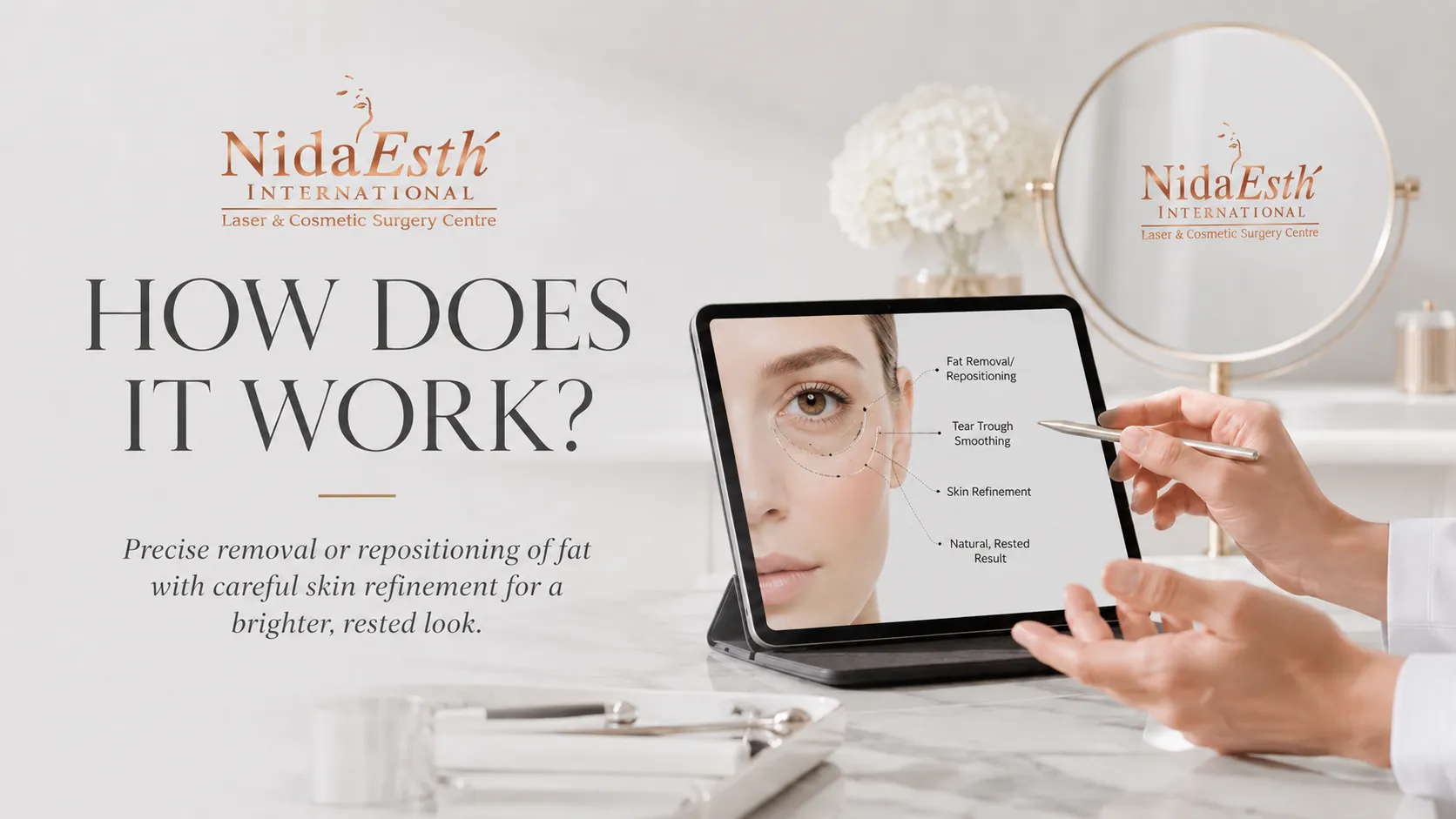
How Does It Work?

Step 1: Analysis and Planning
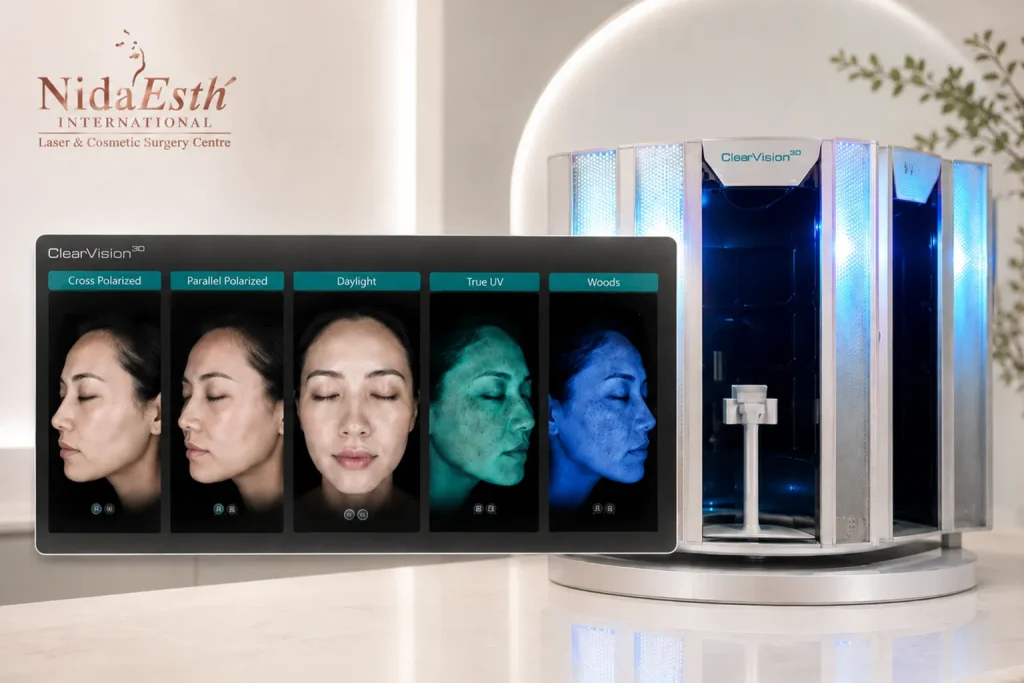
Using AI Vectra 3D simulation and clinical evaluation, Dr. Piya analyzes the eye structure, fat distribution, and skin condition to design a customized surgical plan.

Step 2: Anesthesia
The procedure is performed under local anesthesia with sedation or general anesthesia, depending on complexity and patient comfort.

Step 3: Incision Technique

  • Transconjunctival Approach (for younger patients with good skin elasticity):
    The incision is made inside the lower eyelid, allowing fat to be removed or repositioned without external scarring.
  • Subciliary Approach (for older patients with loose skin):
    A fine incision is made just below the lash line, enabling skin tightening and muscle support.


Step 4: Fat Repositioning
Instead of simply removing fat, Dr. Piya carefully repositions it to fill tear trough depressions and restore smooth contours. This modern “fat-preserving” method prevents hollowness and maintains natural fullness.

Step 5: Skin and Muscle Tightening
Excess skin is trimmed conservatively, and the orbicularis oculi muscle is tightened for structural support. This ensures a firm and youthful lower eyelid shape.

Step 6: Closure and Recovery
Tiny sutures are used and removed within 5–7 days. Cold compresses and prescribed ointments aid recovery.

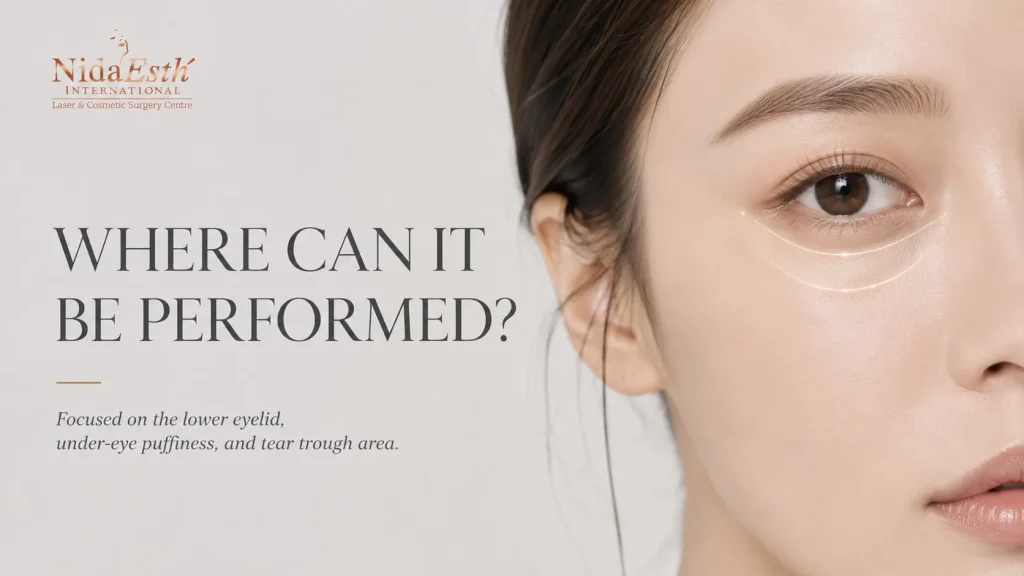
Where Can It Be Performed?

Under-Eye Bag Surgery is specifically performed on the lower eyelid region, addressing:

  • Bulging fat pockets under the eyes
  • Loose or wrinkled skin beneath the lashes
  • Deep tear trough lines (the groove between eyelid and cheek)

Good Candidates

You may be a good candidate if:

  • You have persistent puffiness or “eye bags” that don’t improve with rest.
  • You notice wrinkled, sagging, or crepey skin beneath the eyes.
  • You feel that tired eyes make you look older than your actual age.
  • You are in good overall health, a non-smoker, and have realistic expectations.
  • You have previously tried fillers or laser treatments but want a permanent correction.
  • You want to look naturally refreshed without changing your facial identity.

Nida Esth

Add us to get
exclusive offers.

Exclusively for clients with a scheduled appointment
who have completed the Skin Treatment Program.

* Terms and conditions apply.

Contact Us Today

Call: +662-252-221

Beautifying Hours:

Tue – Sat : 9AM. – 6PM.
Sun – Mon : 9AM. – 5PM.

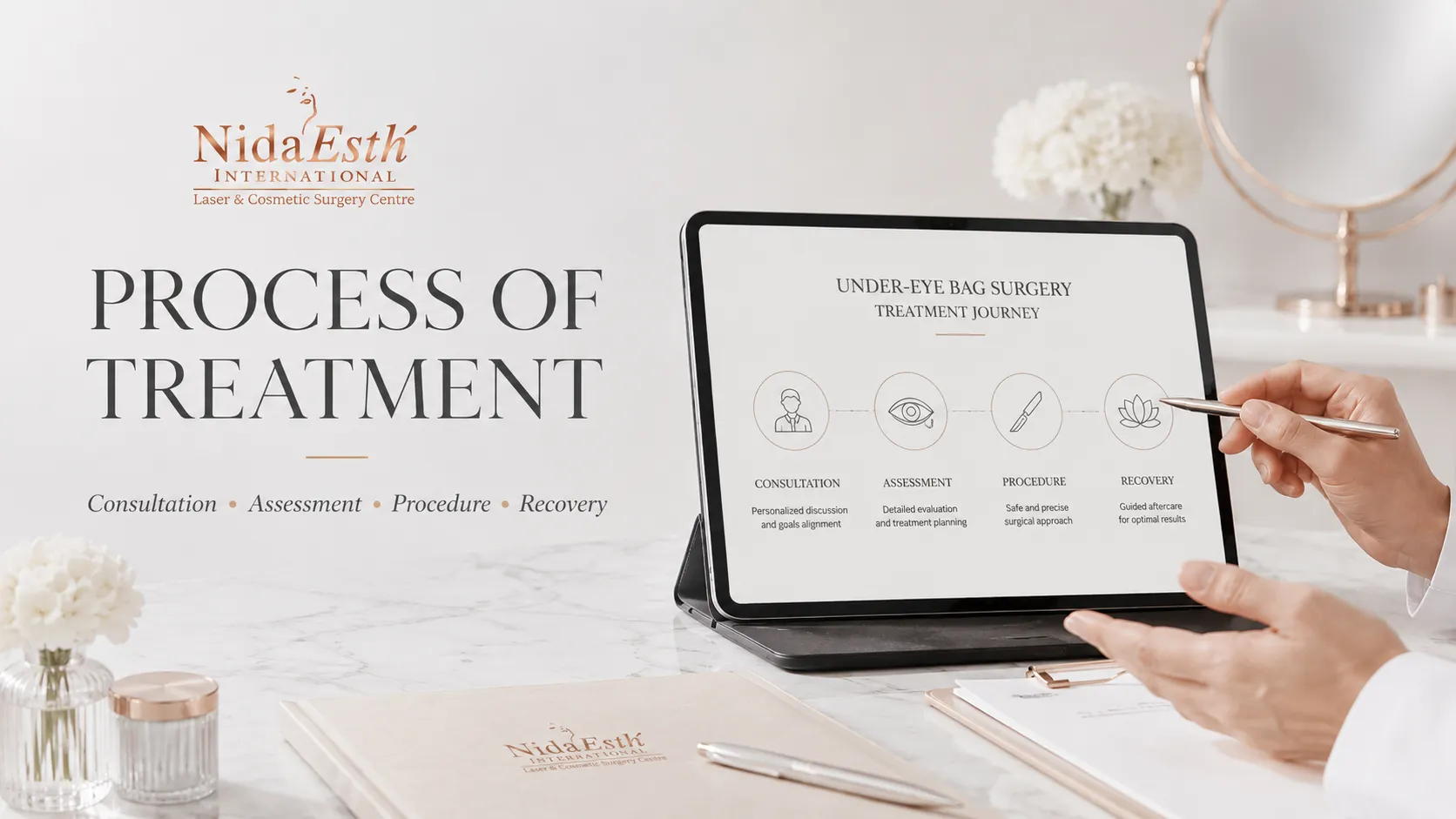
Process of Treatment

Before Surgery

  • 4 weeks before: Avoid blood-thinning medication (aspirin, vitamin E, herbal supplements).
  • 2 weeks before: Stop smoking and alcohol to optimize healing.
  • 1 week before: Undergo pre-operative evaluation and photography for planning.
  • Day before: Get plenty of rest; arrange a companion for your surgery day.


On the Day of Surgery

  • The procedure takes about 1–2 hours.
  • Sedation or general anesthesia ensures full comfort.
  • You can return home the same day.


After Surgery

  • Mild swelling or bruising may last 7–10 days.
  • Apply cold compress for the first 48 hours.
  • Stitches (if external) are removed after 5–7 days.
  • Makeup and contact lenses can usually be resumed after 10–14 days.
  • Final results are visible in 4–6 weeks, with scars fading completely over time.


At Nida Esth’ International, patients also receive laser skin rejuvenation or PRP therapy post-surgery to enhance healing and minimize pigmentation or fine lines.

Conclusion

Under-Eye Bag Surgery is more than a cosmetic procedure — it’s a restoration of youth, vitality, and confidence. In the expert hands of Dr. Piya Rungruxsiri at Nida Esth’ International, every detail is meticulously planned to ensure harmony between the eyes and the overall face.

Through state-of-the-art techniques, scarless incisions, and individualized artistry, Dr. Piya transforms tired eyes into radiant, refreshed expressions — helping you look as young and energized as you feel.

FAQ

Is the procedure painful?

Not at all. Local anesthesia and sedation make the surgery comfortable. Post-surgery discomfort is mild and managed with medication.

With the transconjunctival approach, no external scar is visible. Even the external (subciliary) incision heals discreetly and fades within weeks.

Most swelling subsides within a week. You can return to work in 5–10 days and resume full activity in 2 weeks.

Yes. Many patients combine lower blepharoplasty with upper eyelid surgery, fat grafting, or laser resurfacing for comprehensive rejuvenation.

Results are long-lasting — often 8–10 years or more — depending on genetics, skin type, and lifestyle.

Fillers offer temporary correction for mild cases, but cannot fix large fat herniations. Surgery offers permanent, structural correction for moderate to severe cases.

Light makeup can usually be applied after 10–14 days, once incisions have healed.

Dr. Piya’s modern technique maintains your natural eye shape while subtly lifting and smoothing. His focus is on rejuvenation, not alteration.

Related Article