Facial Lifting and Tightening in Bangkok: Understanding Non-Surgical, Minimally Invasive, and Surgical Options
Behind Surgery | By Dr. Piya Rungruxsiri, MD.
Board-Certified Plastic Surgeon, ISAPS member
CEO & Co-Founder of Nida Esth’ International, Bangkok, Thailand at Siam Square Soi 9
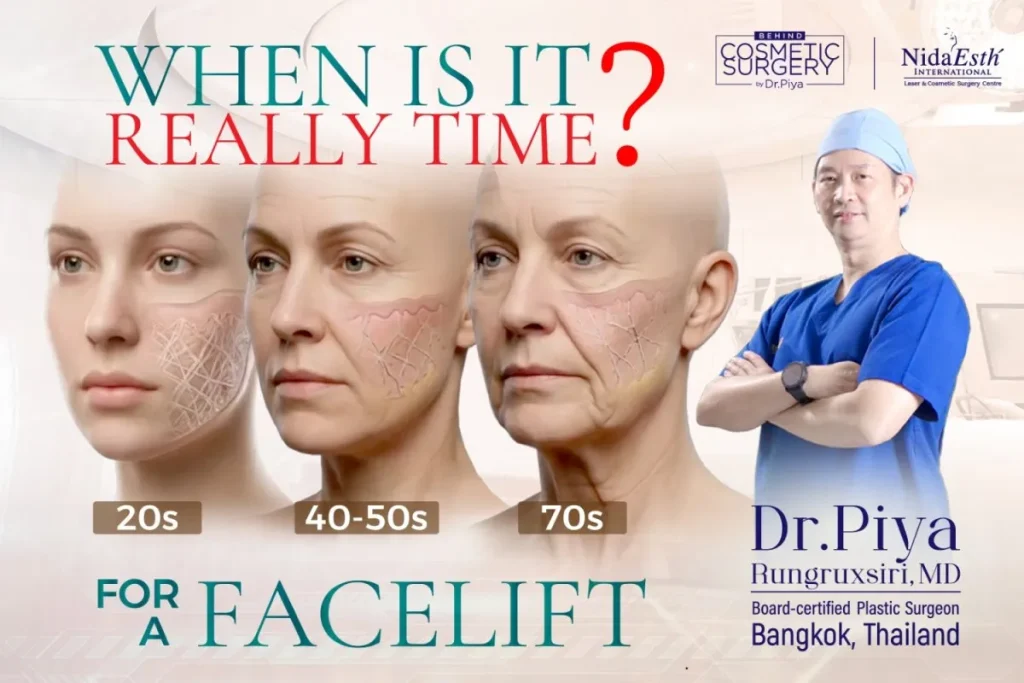
When we first asked the question — “How old is old enough for a facelift?” — the answer was simple: there is no fixed age.
Chronological age does not equal anatomical ageing. A person in their early 40s may show significant jawline softening and ligament laxity due to genetics, sun exposure, or weight fluctuation, while someone in their mid-50s may still maintain strong structural support. What truly matters is not the birthday — but the biological condition of the face.
In 2026, facial lifting is defined by three core factors: tissue laxity, fat compartment descent, and skin quality. Ageing occurs in layers. First, collagen declines and elasticity weakens. Then, fat pads shift downward, blurring the jawline. Eventually, deeper structural layers such as the SMAS begin to descend.
Because these changes progress at different speeds in different individuals, two people of the same age may require completely different strategies — from collagen stimulation and tightening technologies to minimally invasive lifting, or surgical repositioning.
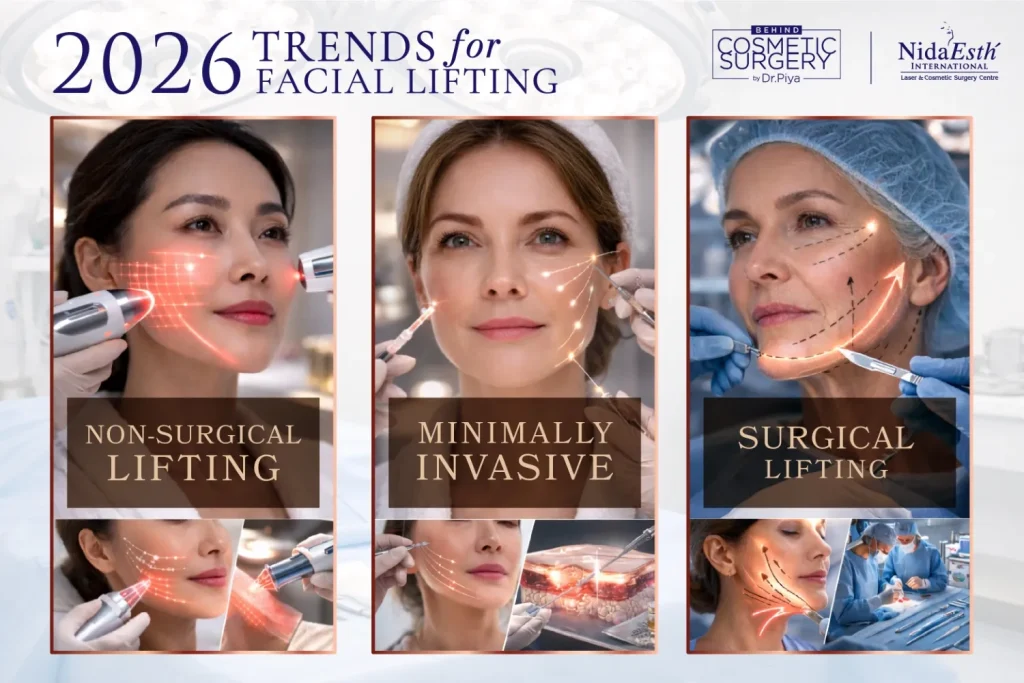
The modern conversation is no longer about age.
It is about timing — choosing the right intervention at the right anatomical stage to achieve the most natural and lasting outcome.
• Level One: Advanced Non-Surgical Lifting and Tightening
Today, lifting alone is not enough.
In earlier decades, lifting focused primarily on tightening skin. However, contemporary understanding recognises that youth requires more than tightness.
A youthful face reflects:
- Lift
- Preserved volume
- Healthy skin quality
Overly aggressive tightening can compromise natural facial harmony. When volume is excessively reduced or skin is contracted without respecting soft tissue balance, the result may appear hollow, rigid, or prematurely aged rather than refreshed. True rejuvenation is not about over-tightening — it is about restoring support while preserving natural fullness.
Modern non-surgical protocols therefore focus on controlled lifting with structural softness. Subtle facial volume — especially in the midface — contributes to a youthful, healthy appearance.
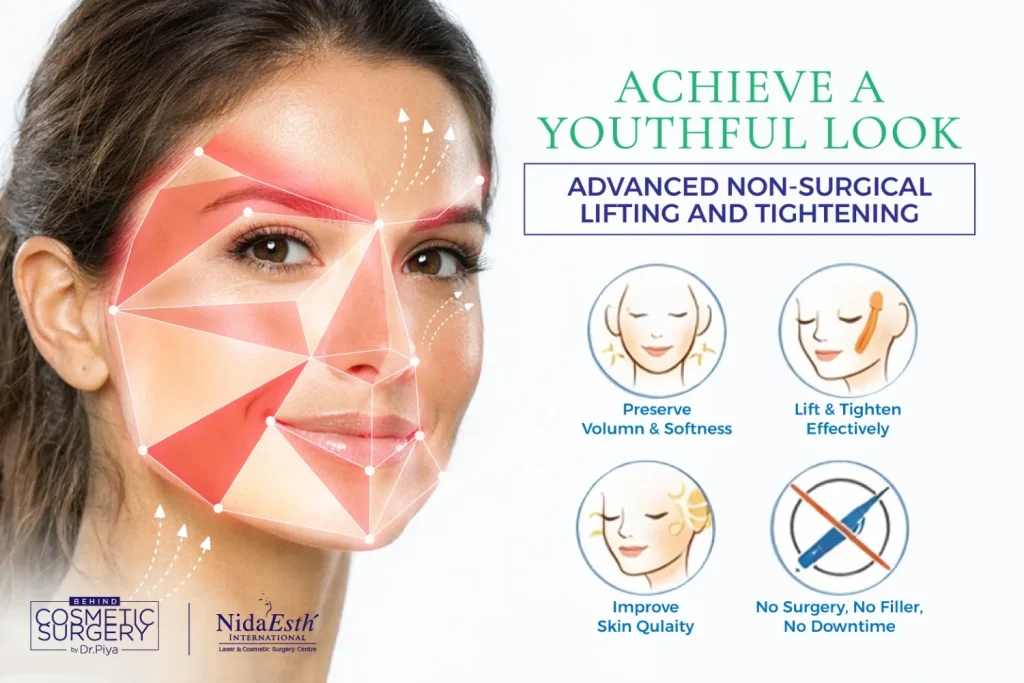
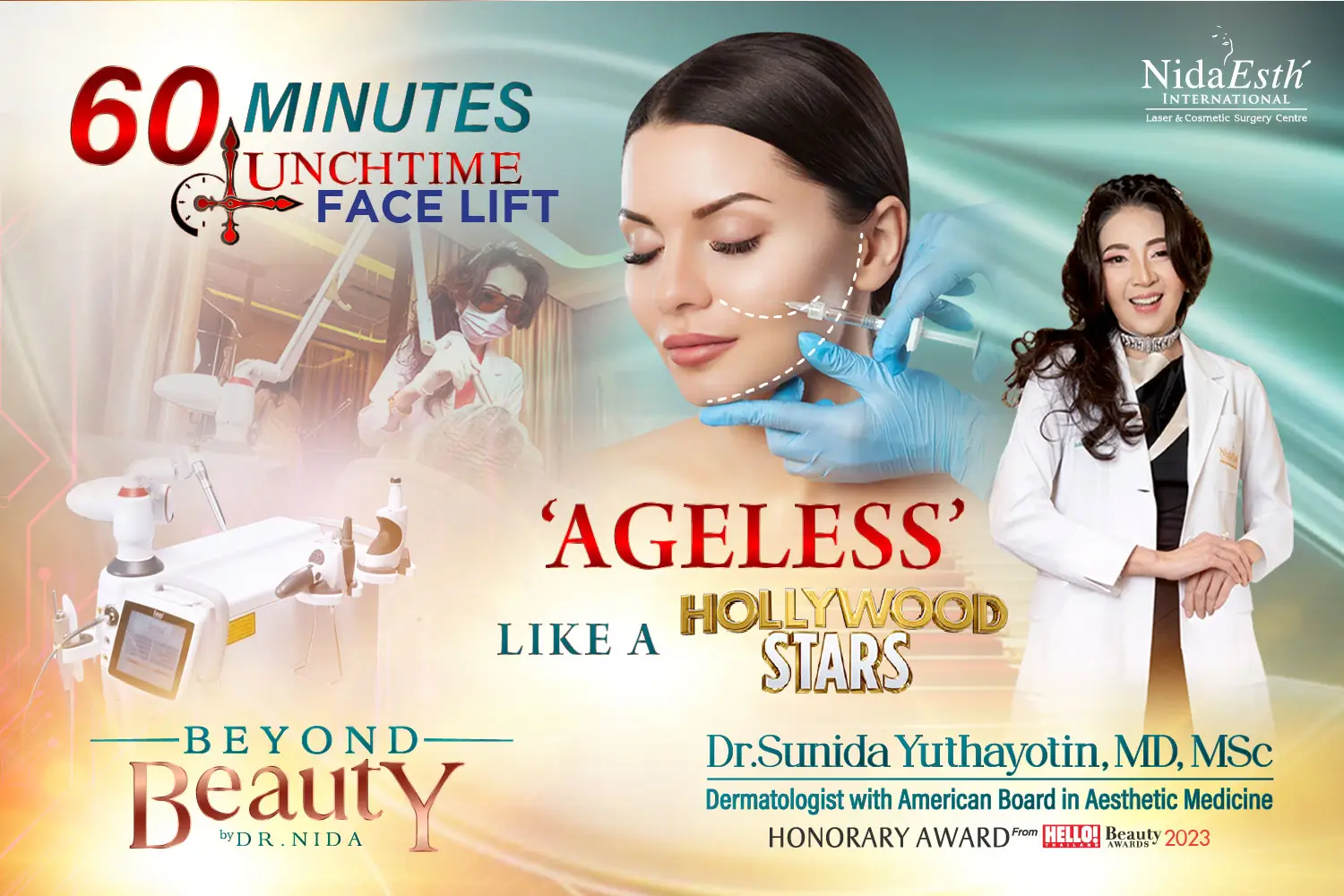
Energy-based systems such as the 6D Signature Lunchtime Facelift stimulate collagen remodelling, improve elasticity, and refine skin texture without incisions, fillers, or anesthesia. In selected cases, internal laser stimulation delivered through the oral cavity further enhances tightening and structural support — without adding synthetic volume or altering natural contours.
The advantages are practical:
- No surgical scars
- No hospital admission
- Minimal downtime
- Immediate return to work or social activity
The limitation is longevity. Results generally last around one year and require maintenance. This level is appropriate for early-stage ageing, when refinement is sufficient.
Please find out more information at https://nida-esth.com
• Level Two: Minimally Invasive Facelift
Another approach to facelifting with scarless natural-looking, and long-lasting results.
As ageing progresses, structural descent becomes more apparent. The jawline gradually loses its sharp contour. Jowls begin to form as mid-facial fat compartments shift downward. The lower face can appear heavier, even in individuals who maintain stable body weight. Submental fullness may develop due to a combination of fat accumulation and skin laxity, further softening the neck-chin angle.
At this stage, many individuals feel caught in between. Traditional non-surgical tightening may improve skin quality but cannot sufficiently reposition deeper tissue. Yet they may not feel ready for a full surgical facelift with extensive dissection and downtime.
This is where minimally invasive facelift techniques offer a strategic middle ground. Trinity Lift X, using ultra-fine laser fibers — approximately 0.3–0.6 millimetres in diameter — energy is delivered precisely beneath the skin. The controlled thermal effect contracts fibroseptal networks, stimulates collagen remodelling, and tightens tissue internally, allowing contour refinement and jawline definition with reduced downtime compared to conventional surgery.
This approach focuses on:
- Lipo – refining unwanted submental fat
- Lift – tightening lax tissue
- Define – restoring jawline contour
Technological refinement now allows different systems to target specific anatomical concerns with precision. Certain platforms are designed to address mid-face laxity and early jawline descent through collagen stimulation and ligament support. Others deliver stronger contraction in the lower face to redefine contours more effectively. In cases with pronounced submental fullness, combining targeted fat reduction with plasma-assisted tightening can significantly enhance jawline clarity and neck definition.
Customisation remains critical. Not every individual requires the same depth, energy level, or degree of correction. Treatment must be calibrated according to tissue laxity, fat volume, and structural integrity.
When properly indicated, outcomes may last up to three years. Recovery is shorter than traditional surgery, with minimal downtime and no long visible scars — offering discreet yet meaningful improvement for busy professionals.
Please find out more information at https://nida-esth.com
• Level Three: Surgical Facelift
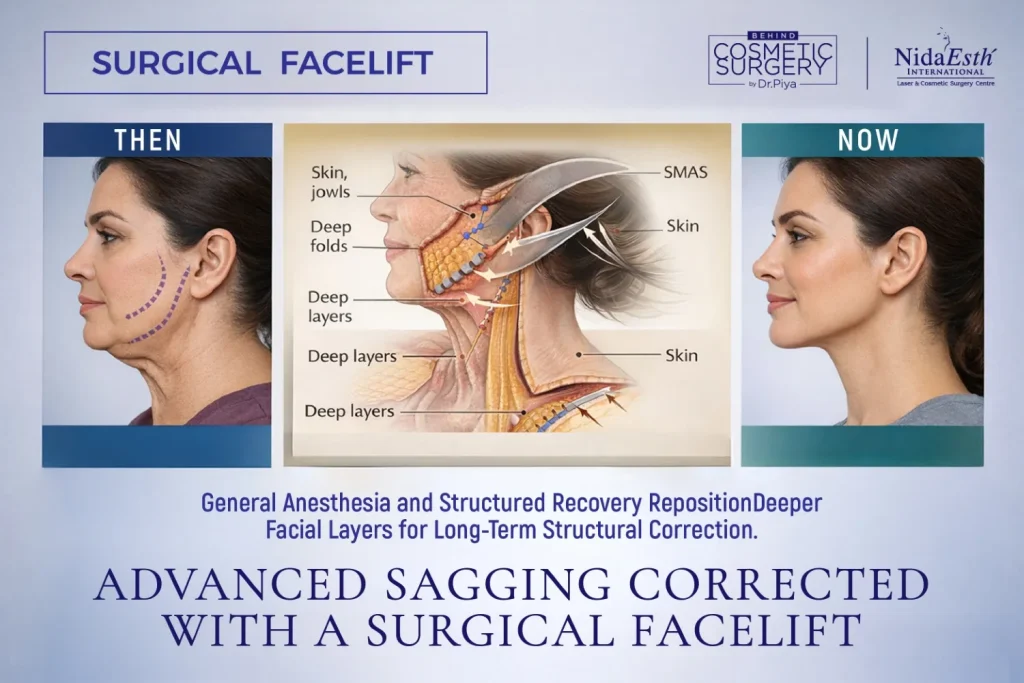
When facial sagging progresses to an advanced stage — characterised by pronounced jowls, deep nasolabial folds, marionette lines, and significant neck laxity — non-surgical or minimally invasive options are often no longer sufficient to reposition descended structures. At this level, the issue is not merely skin looseness, but true descent of the deeper SMAS layer and weakening of retaining ligaments.
In such cases, surgical facelift remains the most definitive solution. Performed under general anesthesia, the procedure involves precise elevation and repositioning of deeper facial layers rather than simple skin tightening. Excess skin is conservatively redraped, while structural support is restored internally to recreate natural jawline definition and a sharper cervicomental angle. Recovery requires structured downtime, typically several weeks for swelling to fully settle.
When executed by an experienced surgical team with refined technique, results can be long-lasting, harmonious, and transformative — restoring contour without creating an over-pulled appearance.
Ultimately, surgery should be selected thoughtfully. The decision should be guided not by chronological age, but by anatomical necessity and realistic expectations.
Please find out more information at https://nida-esth.com
Understanding the Threshold
Contemporary aesthetic literature consistently demonstrates that ageing progresses structurally rather than chronologically. Clinical evaluation — not age alone — determines candidacy for each level of intervention.
Some individuals repeat mild treatments beyond their effective stage. Others assume surgery is inevitable when less invasive approaches may still suffice.
The threshold is anatomical, not numerical.
Choosing the Right Level
Facial lifting and tightening in 2026 offer more options than ever before.
- Non-surgical refinement
- Minimally invasive structural correction
- Surgical repositioning for advanced descent
As a board-certified plastic surgeon and international member of the International Society of Aesthetic Plastic Surgery (ISAPS), my approach emphasises proportionate decision-making grounded in anatomical assessment.
At Nida Esth’ International in Bangkok, surgical evaluation is integrated with advanced energy-based technologies to ensure each recommendation aligns with both structure and lifestyle.
Facial lifting today is not about rushing into surgery. It is about choosing wisely — at the right time. Because when it comes to a facelift, the real question is not age. It is timing.
If you are unsure what you need, consultation is essential. Ageing is personal — and so is the solution. For inquiries about facelifting procedures or other aesthetic concerns, you are welcome to reach out for a professional assessment via
- Official WhatsApp: +66 81 010 2200
- Website: https://nida-esth.com
- Instagram: @nidaesthcenter